


How to Substitute Yarn Successfully
Have you ever found the perfect crochet pattern, only to discover that the recommended yarn is unavailable, discontinued, or simply not your style? Fortunately, yarn substitution is a common practice among crocheters and can open up a world of creative possibilities. However, choosing a replacement yarn isn’t as simple as selecting a similar color or fiber.
Understanding how to substitute yarn successfully can help you achieve a finished project that looks, feels, and fits as intended. In this guide, we’ll explore the key factors to consider when replacing yarn in crochet patterns.
Why Substitute Yarn?
There are many reasons why crocheters choose to use a different yarn than the one specified in a pattern:
- The original yarn is unavailable in your country.
- The yarn has been discontinued.
- You prefer a different fiber.
- You are trying to use yarn from your stash.
- You are adapting the project for a different climate or season.
Whatever the reason, a thoughtful substitution can produce excellent results.
Step 1: Start with Yarn Weight
The first step when searching for a substitute yarn is to compare the yarn weight. Most crochet patterns are designed around a specific yarn thickness, which directly affects the size and drape of the finished project.
The yarn weights are defined as:
- Cobweb (30-40+ WPI)
- Thread (30-40+ WPI)
- Lace (16+ WPI)
- Light Fingering (15-16 WPI)
- Fingering (14 WPI)
- Sport (12 WPI)
- DK (11 WPI)
- Worsted (9 WPI)
- Aran (8 WPI)
- Bulky (7 WPI)
- Super Bulky (5-6 WPI)
- Jumbo (0-4 WPI)
When substituting yarn, aim to choose a yarn in the same weight category as the original whenever possible.
Keep in mind that yarn weight names can vary between countries and manufacturers. Rather than relying solely on labels, compare the recommended gauge and meterage for a more accurate match.
Step 2: Compare Gauge
Gauge refers to the number of stitches and rows worked within a specific measurement, usually 10 cm (4 inches).
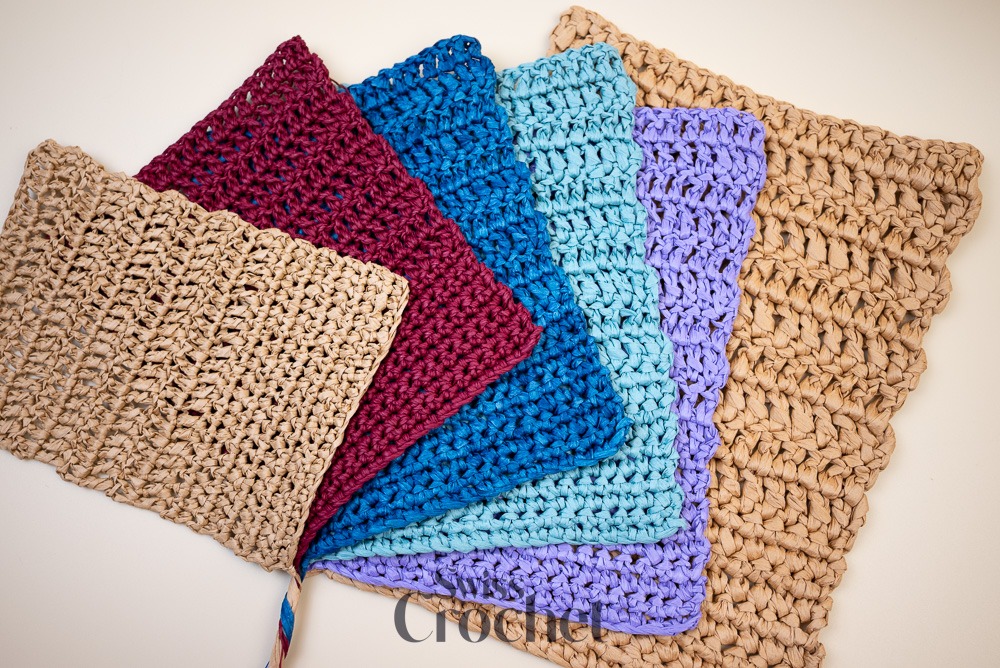
A replacement yarn should be capable of producing a gauge that is similar or identical to the one specified in the pattern. Keep in mind, even if two yarns are both labeled as DK weight, they may produce noticeably different gauges.
Before starting a large project, create a gauge swatch using your substitute yarn and the recommended hook size. Measure carefully and adjust hook size if necessary.
Matching gauge ensures that you will need a similar amount of yarn as described in the pattern. It also helps ensure that the finished dimensions of the project remain close to the designer’s original measurements. If your gauge does not match, it is very likely that you will need more yarn.
Matching gauge is particularly important for:
- Garments
- Hats, mittens, gloves
- Socks
- Fitted accessories
- Designs that use specific amounts of yarn due to colorwork or other techniques
For blankets, shawls, and some home décor projects, exact gauge is often less critical, unless otherwise specified in the pattern.
Step 3: Check the Yardage or Meterage
One of the most common mistakes when substituting yarn is comparing skein weights rather than total length.
For example:
- Yarn A: 100 g = 400 m
- Yarn B: 100 g = 220 m
Although both skeins weigh the same, Yarn A contains almost twice as much yarn.
When comparing potential substitutes, look for yarns that provide a similar meterage for the same skein weight (for example, 50 g or 100 g). Keep in mind that fiber composition, spinning method, and yarn construction all influence how many meters are contained in a given weight of yarn.
Always compare the total meterage required for the pattern and calculate how many skeins of your substitute yarn you will need (see: calculator at the end of this page).
Step 4: Consider Fiber Content
Fiber choice has a major impact on the appearance and performance of a project.
Animal Fibers (such as wool, alpaca, mohair, silk, cashmere, angora, yak, etc)
Animal fibers provide warmth and elasticity. Depending on how they are spun into yarn, they can be very lofty, as well as fluffy or dense and heavy.
Plant Fibers (such as cotton, hemp, linen, jute)
Plant fibers are breathable, durable, and usually have less stretch than animal fibers. They are easier to wash and care for than animal fibers. Depending on how they are spun into yarn, they can be stiff or flexible, allowing for a wide range of projects.
Fiber Blends
Blending animal and plant fibers into the same yarn often leads to very interesting results giving way to versatile applications. The behavior and final result depends a lot on the percentages of each component and the spinning technique.
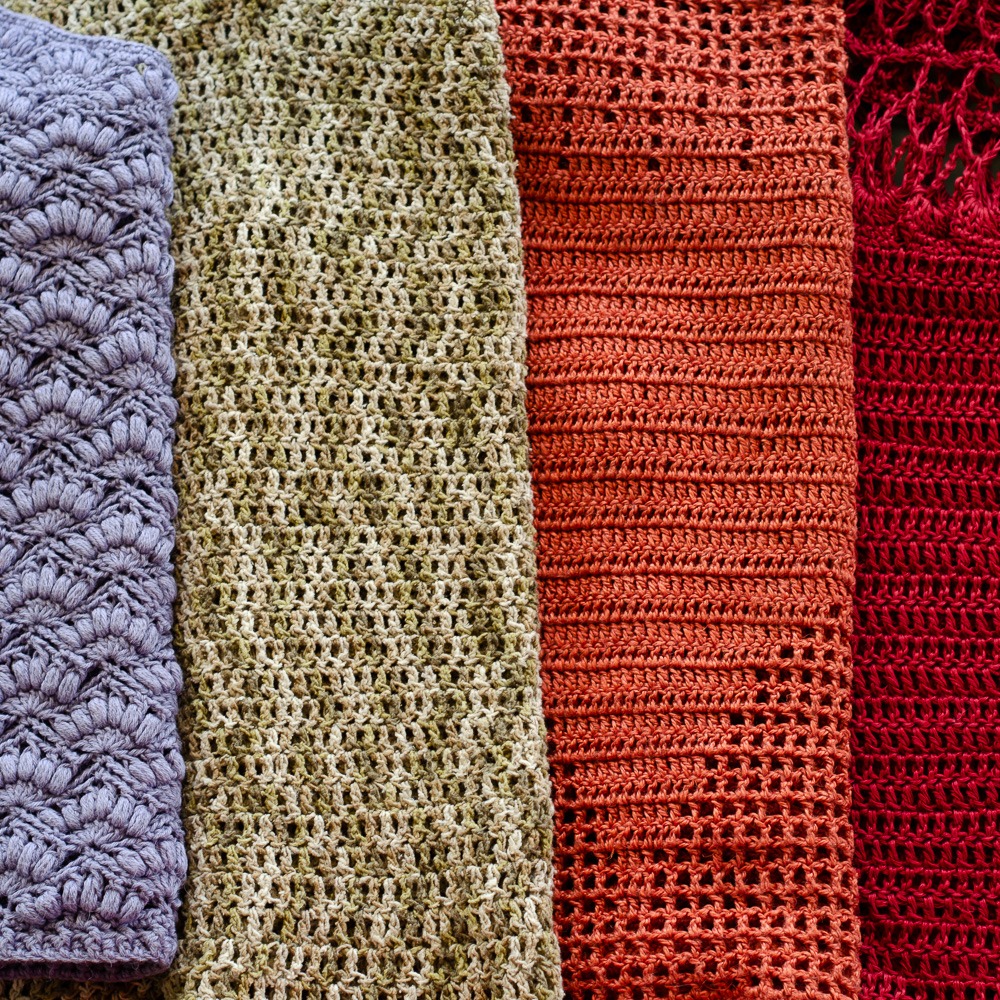
Changing fiber content can significantly alter the final result. A cardigan designed in wool will behave quite differently when crocheted in cotton, even if the gauge matches perfectly.
Step 5: Consider Yarn Construction
Even when two yarns have the same weight, gauge, and fiber content, they may not behave the same way.
Some yarns are smooth and round, while others are fluffy, textured, ribbon-like, or loosely spun. These differences can affect the appearance of your stitches and the overall look of the finished project.
When choosing a substitute yarn, try to select one that has a similar appearance and structure to the original yarn used in the pattern.
Step 6: Think About Drape
Drape refers to how fabric hangs and moves. Generally speaking, softer and more fluid yarns create more drape, while stiffer yarns create more structure.
Patterns for flowing garments and shawls often rely on yarns with good drape, such as merino wool, alpaca, bamboo, silk, or blends containing these fibers.
In contrast, structured bags, baskets, and amigurumi generally require yarns that create firmer fabric.
Before substituting, ask yourself whether the replacement yarn will create a similar fabric to the original.
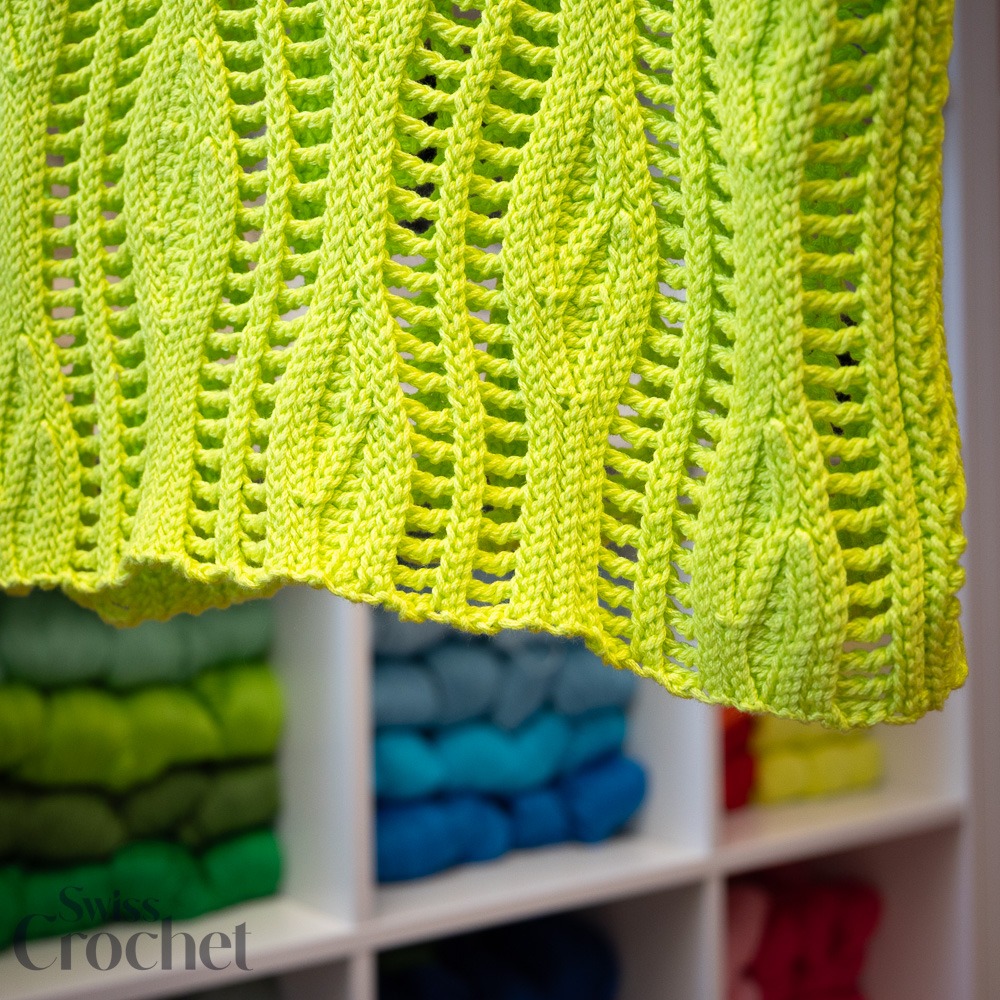
Step 7: Don’t Forget About Texture
Novelty yarns, brushed yarns, bouclé yarns, and highly textured yarns can dramatically change the appearance of a project.
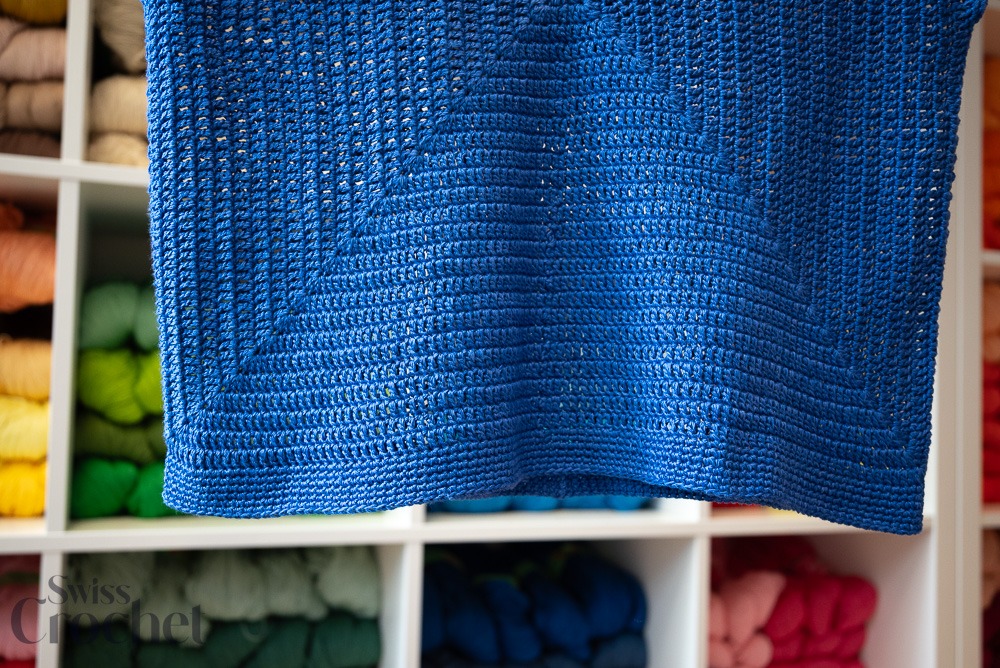
A lace shawl designed with smooth yarn may lose stitch definition when worked in a fluffy brushed yarn. Likewise, intricate textured stitches may become less visible when using fuzzy fibers. Similarly, highly variegated yarns can obscure lacework, cables, and textured stitch patterns that are clearly visible in solid colours.
If the pattern relies heavily on stitch detail, choose a yarn with similar texture and construction.
Step 8: Swatch Before You Commit
Even experienced crocheters rarely substitute yarn without testing first.
A small swatch can reveal:
- Whether gauge matches
- How the fabric feels
- Stitch definition
- Drape
- Potential stretching after washing
Spending 20 minutes on a swatch can save many hours of frustration later.
Step 9: When You Can Be More Flexible
Not every project requires a perfect substitution.
For example:
- Blankets can often be made with a wide variety of yarns.
- Shawls can usually be adjusted in size.
- Scarves are generally forgiving.
- Decorative projects often allow for more experimentation.
Garments, however, typically benefit from more careful yarn selection and gauge matching.
Final Thoughts
Yarn substitution may seem intimidating at first, but it becomes easier with experience. By comparing yarn weight, gauge, meterage, fiber content, and fabric characteristics, you can confidently replace almost any yarn in a crochet pattern.
Rather than viewing substitutions as a compromise, many crocheters see them as an opportunity to personalise a project and make it uniquely their own. With a little planning and a simple gauge swatch, you’ll be well on your way to successful yarn substitutions and beautiful finished projects.
Frequently Asked Questions
Can I substitute cotton for wool in a crochet pattern?
Yes, but expect changes in drape, elasticity, warmth, and overall fabric behavior.
Can I use a different yarn weight than the pattern recommends?
Yes, if two conditions are met:
- you can match the gauge,
- you are satisfied with how the swatch fabric looks and behaves with the substitute yarn.
How do I calculate how much substitute yarn I need?
Step 1: calculate the total amount of meters required by the pattern, Z = number of skeins x meters per skein.
Step 2: see how many meters per skein are available in the substitute yarn, that is number Y = meters per skein of substitute yarn.
Step 3: calculate the number of skeins of the substitute yarn you need with X = Z/Y
Always round up to the next whole skein and consider purchasing an extra skein if your gauge differs from the pattern or if the project uses a large amount of yarn.
Or use the calculator below:
Yarn Substitution Calculator